Loading…
NETWORK STREAMINGAUDIO STREAMING

WiFiAudioStreaming
verifiedAn Android application for streaming audio over a local network. It allows you to stream your Android device's internal audio to any device on the network. Developed in Kotlin and Jetpack Compose.
star77 Starsfork_right7 Forks
About
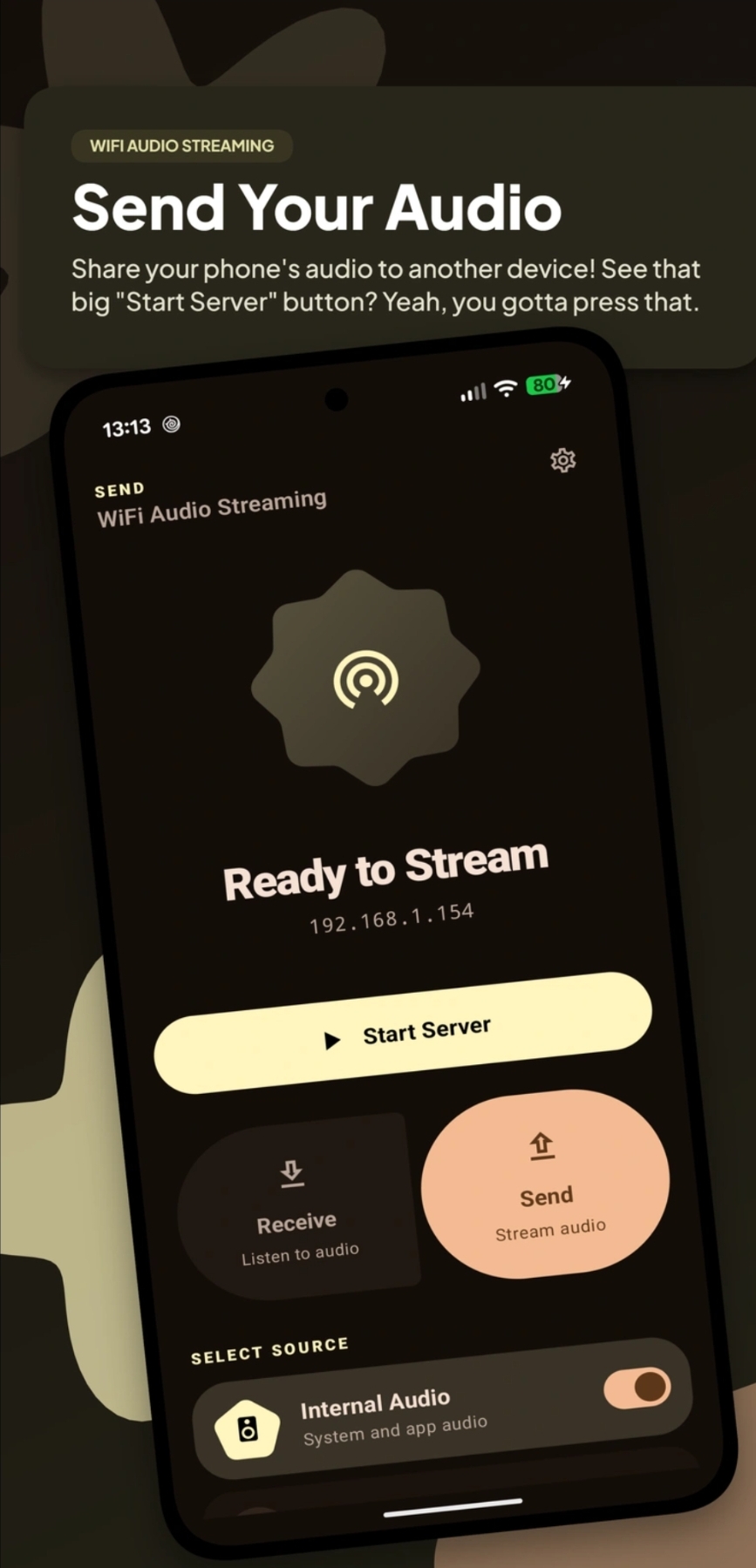
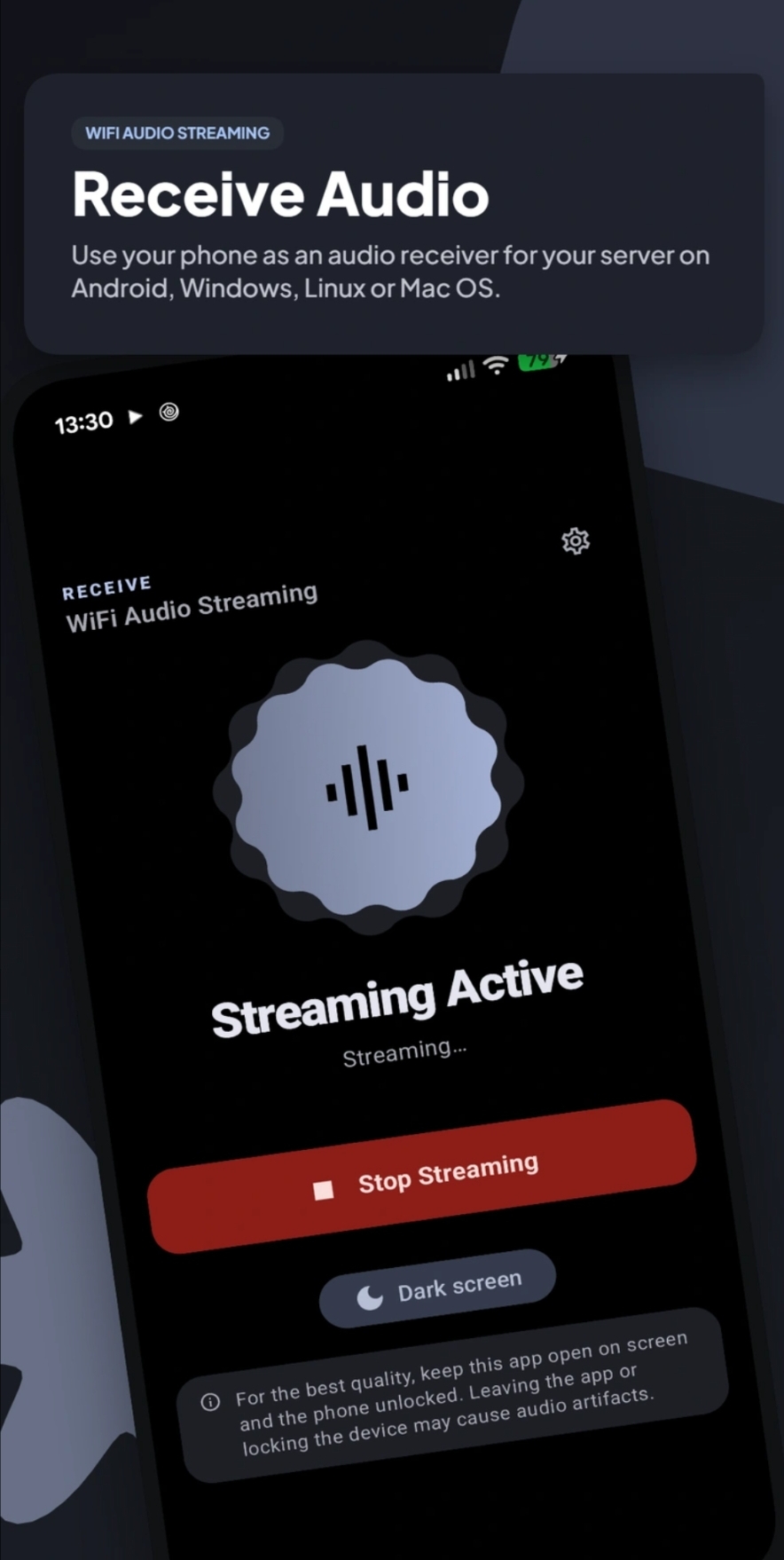
WiFiAudioStreaming turns an Android phone into a wireless audio hub. Set one device to **Send (Server)** and another to **Receive (Client)**, and internal audio — apps, games, music — moves over the local network with no root and no cable. Clients find servers automatically through a UDP multicast beacon, or you can punch in an IP manually if your router blocks discovery.
You get three ways to move the audio. WFAS, the app's own protocol, is built for low latency and stays in sync well enough for gaming or watching video. RTP works with VLC, Kodi, or any player that reads an `.sdp` file. HTTP is the fallback for anything with a browser, including smart TVs, though the browser's own buffering adds a 1–3 second lag you can't tune away.
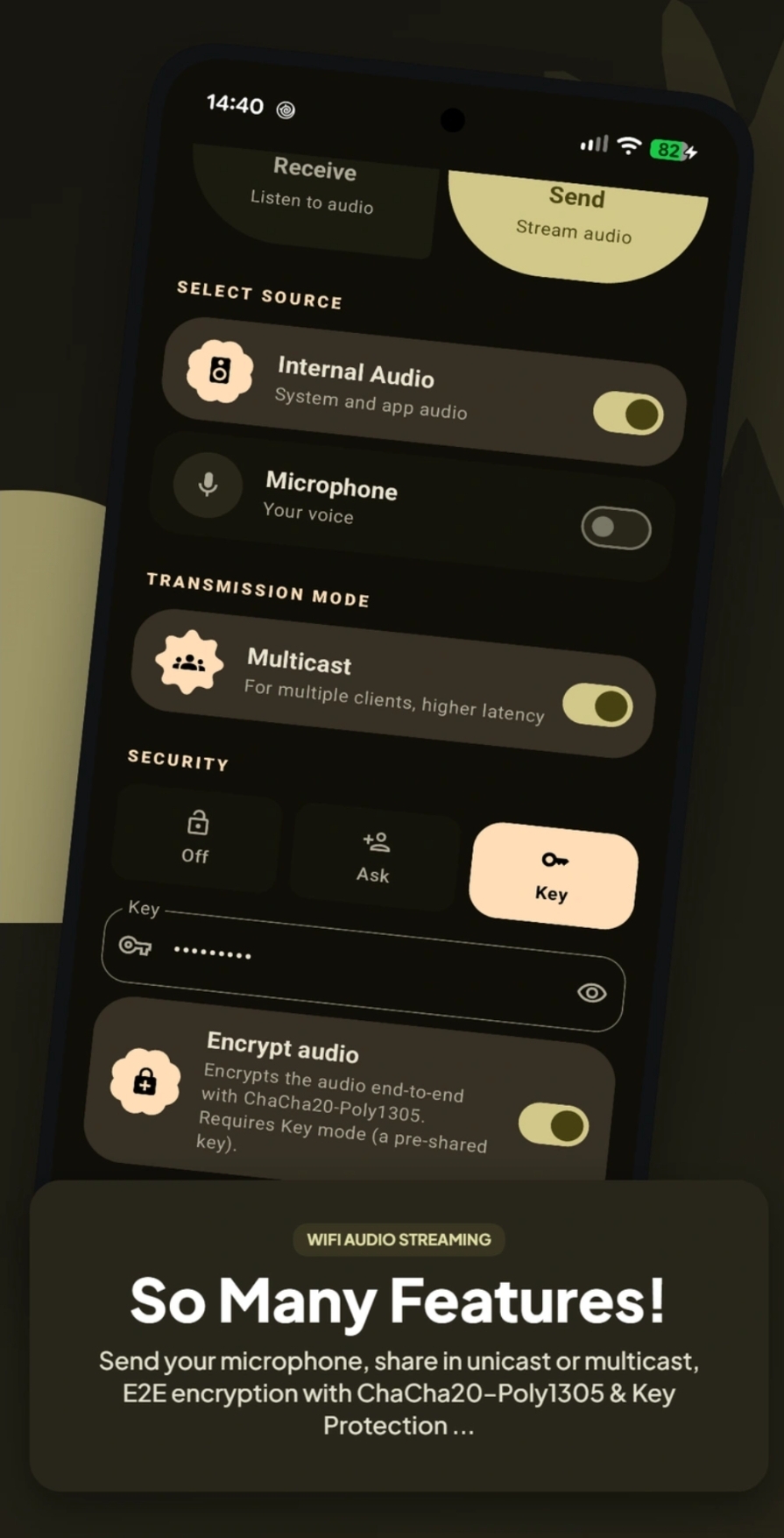
Security is opt-in but real when switched on: Key mode runs an HMAC-SHA256 challenge so the password never crosses the wire, then derives a ChaCha20-Poly1305 key to encrypt every audio packet. There's also a companion desktop app for Windows and Linux, and the WFAS wire protocol has a separate MIT-licensed C99 reference implementation for anyone building firmware or embedded receivers.
One thing to know before installing: the app itself ships under EUPL-1.2, a copyleft license, so a fork that gets redistributed has to stay open under the same terms — this isn't a permissively-licensed drop-in for a closed product.
gallery_thumbnailGallery
zoom_in
zoom_in
zoom_in
zoom_in
SourceOpen source
Authormarcomorosi06
Since2025
LicenseEUPL-1.2
Versionv1.1
OS
ANDROID
auto_awesomeSimilar & Recommended Tools
View Allarrow_forward
SourceOpen source
Authormarcomorosi06
Since2025
LicenseEUPL-1.2
Versionv1.1
OS
ANDROID
Capability
bolt
Listen from any browser
HTTP mode streams AAC audio to any device with a browser or a smart TV, no app install on the receiving end, though expect a 1–3 second buffering delay.
lock
Lock the stream down
Key mode makes clients prove they know the password via HMAC-SHA256 before encrypting every packet with ChaCha20-Poly1305, so nobody else on the Wi-Fi can listen in.
extension
Trigger it from Tasker
Deep links and broadcast intents let automation apps start or stop streaming, and you can save full server/client setups as one-tap presets.