Loading…
AI AGENTCLI TOOLMCP SERVEROTHER

Nextcloud
verifiedNextcloud puts your files, calendars, and chat on a server you control, not someone else's cloud.
star36.2k Starsfork_right5.1k Forks
About
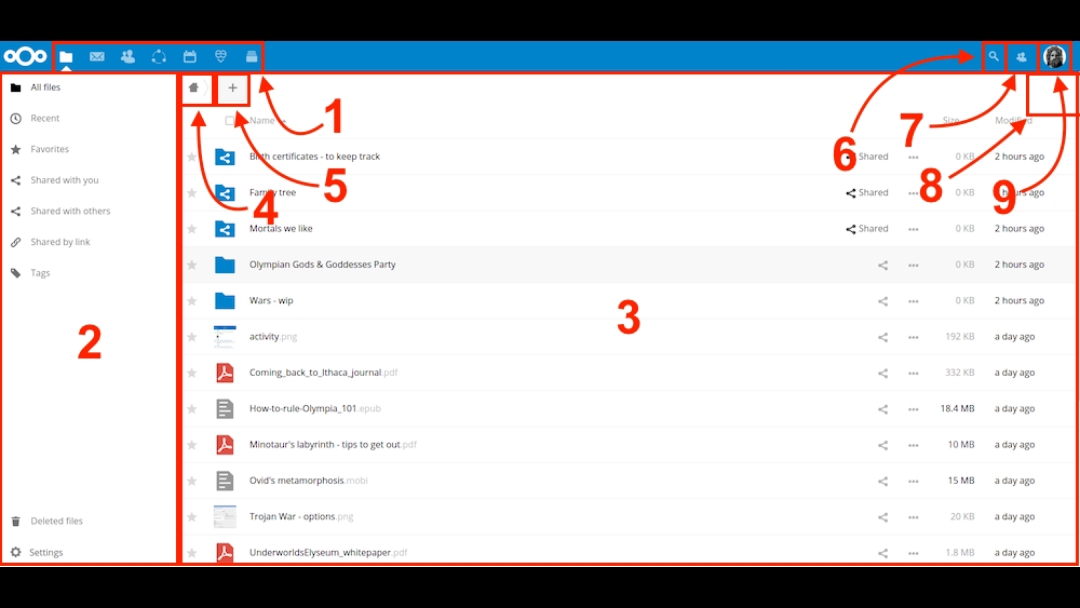
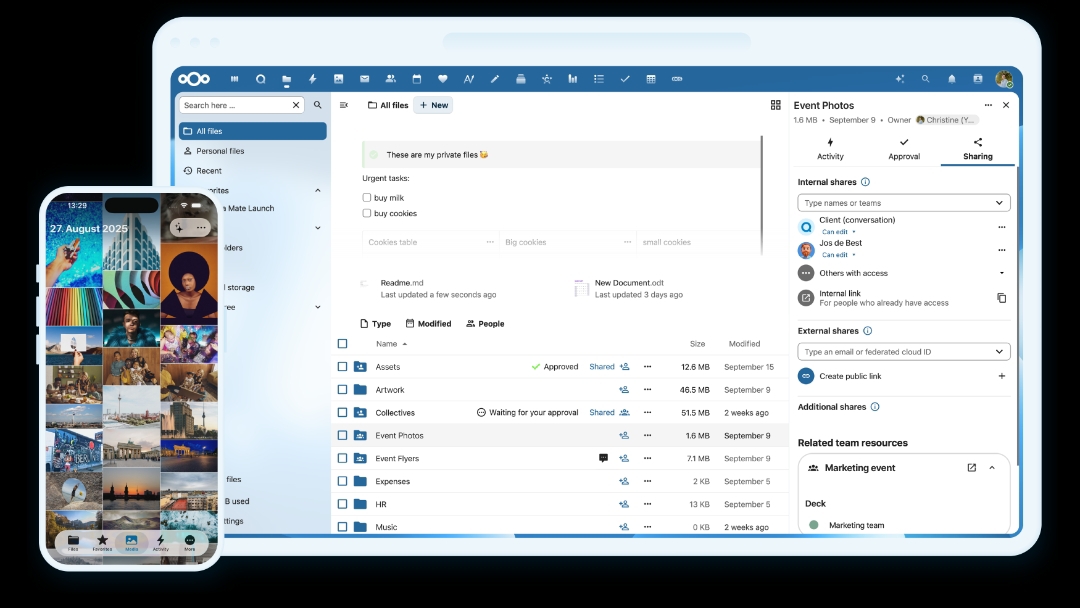
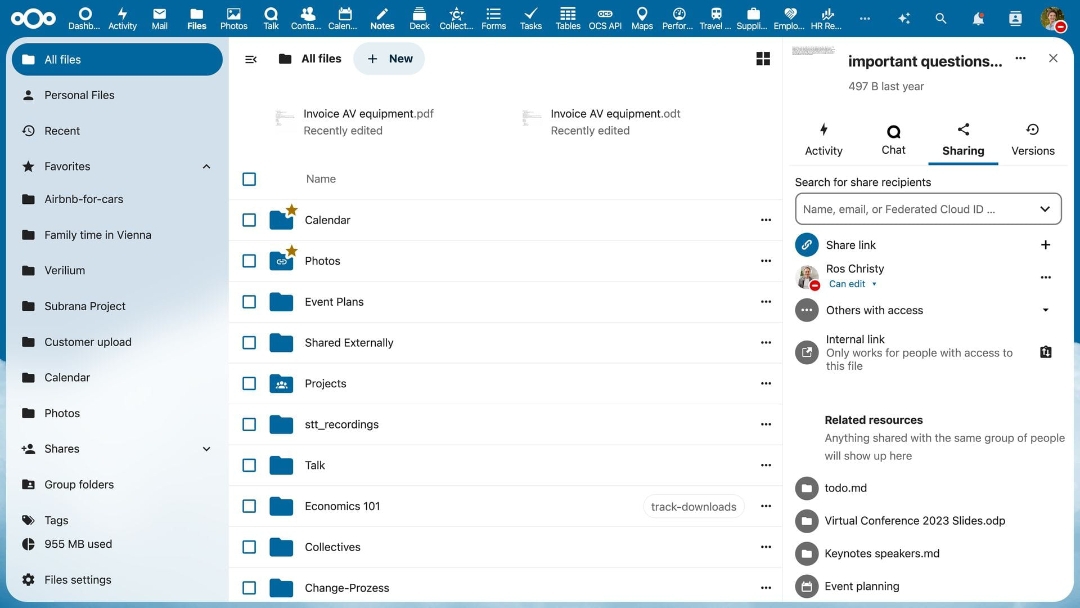
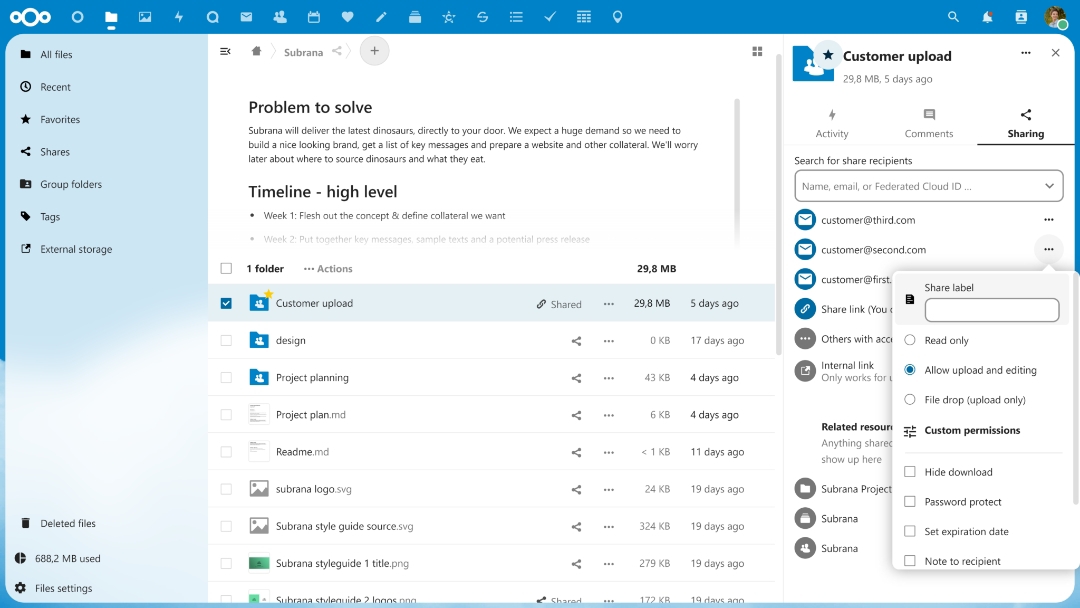
Nextcloud is the software behind your own private Dropbox, minus Dropbox. Install it on a home server, a Raspberry Pi, or a rented VPS, and it hands you file sync, calendars (CalDAV), contacts (CardDAV), and a growing Office suite for co-editing documents — all served from hardware you own. The core is PHP and Vue, AGPL-3.0 licensed, with 35,000+ GitHub stars and a release cadence that lands every few weeks.
What makes it more than a file drop is the app store. Governments, universities, and companies like Deutsche Telekom bolt on video calls (Talk), kanban boards (Deck), and even a local AI assistant, turning the base install into something closer to an internal Google Workspace. Admins manage all of it through the occ command-line tool, and the official Docker image handles first-run setup through environment variables — set MYSQL_HOST and friends and skip the install wizard entirely.
The honest caveat: performance is on you. Several self-hosters report a snappy first week that slows down once real usage kicks in, especially on underpowered hardware — a dual-core box with 4GB RAM will choke, while a quad-core with 8GB and an SSD runs fine. Nextcloud AIO exists specifically to take the sting out of that setup, but there's no getting around needing to actually run a server.
gallery_thumbnailGallery
zoom_in
zoom_in
zoom_in
zoom_in
SourceOpen source
Authornextcloud
Since2016
LicenseAGPL-3.0
Versionv34.0.1
OS
LINUXWINDOWSMACOS
Websitehttps://nextcloud.com
auto_awesomeSimilar & Recommended Tools
View Allarrow_forward
SourceOpen source
Authornextcloud
Since2016
LicenseAGPL-3.0
Versionv34.0.1
OS
LINUXWINDOWSMACOS
Websitehttps://nextcloud.com
Capability
bolt
1. App ecosystem
Calendar, Contacts, Mail, and Talk (video/audio chat) install as apps on top of the same server, discoverable from the built-in App Store.
lock
2. Security baked
Encryption at rest, two-factor authentication, and an active HackerOne bounty program cover the self-hosting security side.
extension
3.Cross-platform clients
Official sync clients ship for Windows, macOS, Linux, Android, and iOS, keeping files in sync across desktop and mobile.