Loading…
MCP SERVERCLI TOOLDEVELOPER TOOLS

Code Review Graph
verifiedLocal-first code intelligence graph for MCP and CLI. Builds a persistent map of your codebase so AI coding tools read only what matters, with benchmarked context reductions on reviews and large-repo workflows.
star29.3k Starsfork_right2.7k Forks
About
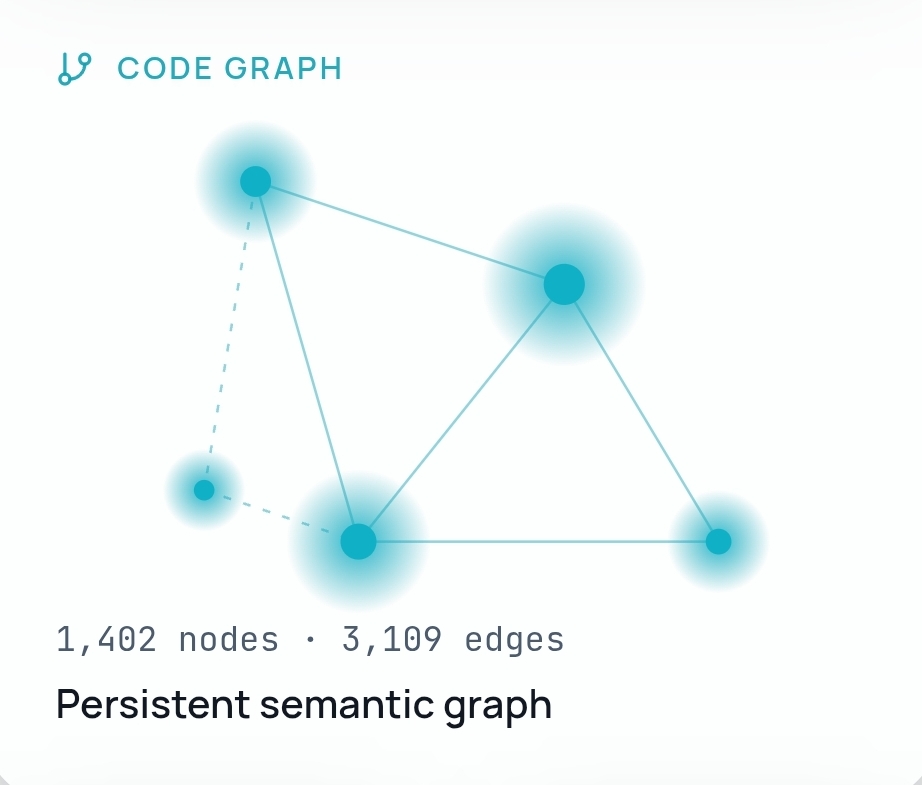
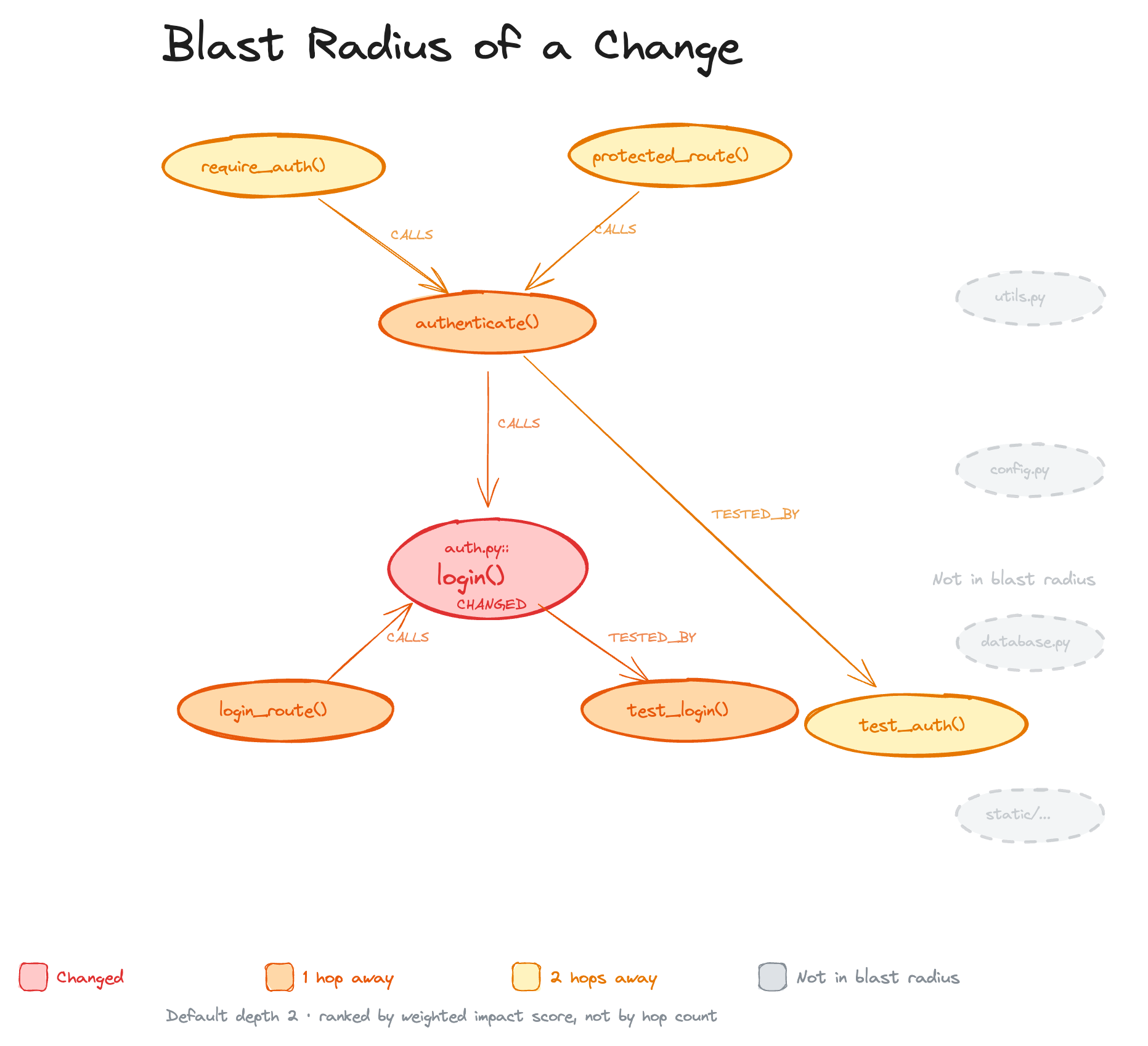
code-review-graph parses your repository with Tree-sitter and stores the result as a graph in a local SQLite file: functions and classes as nodes, calls and inheritance and test coverage as edges. When a file changes, it walks that graph to compute the blast radius, every caller, dependent, and test the change could break, and hands an AI coding assistant that list instead of the whole repo.
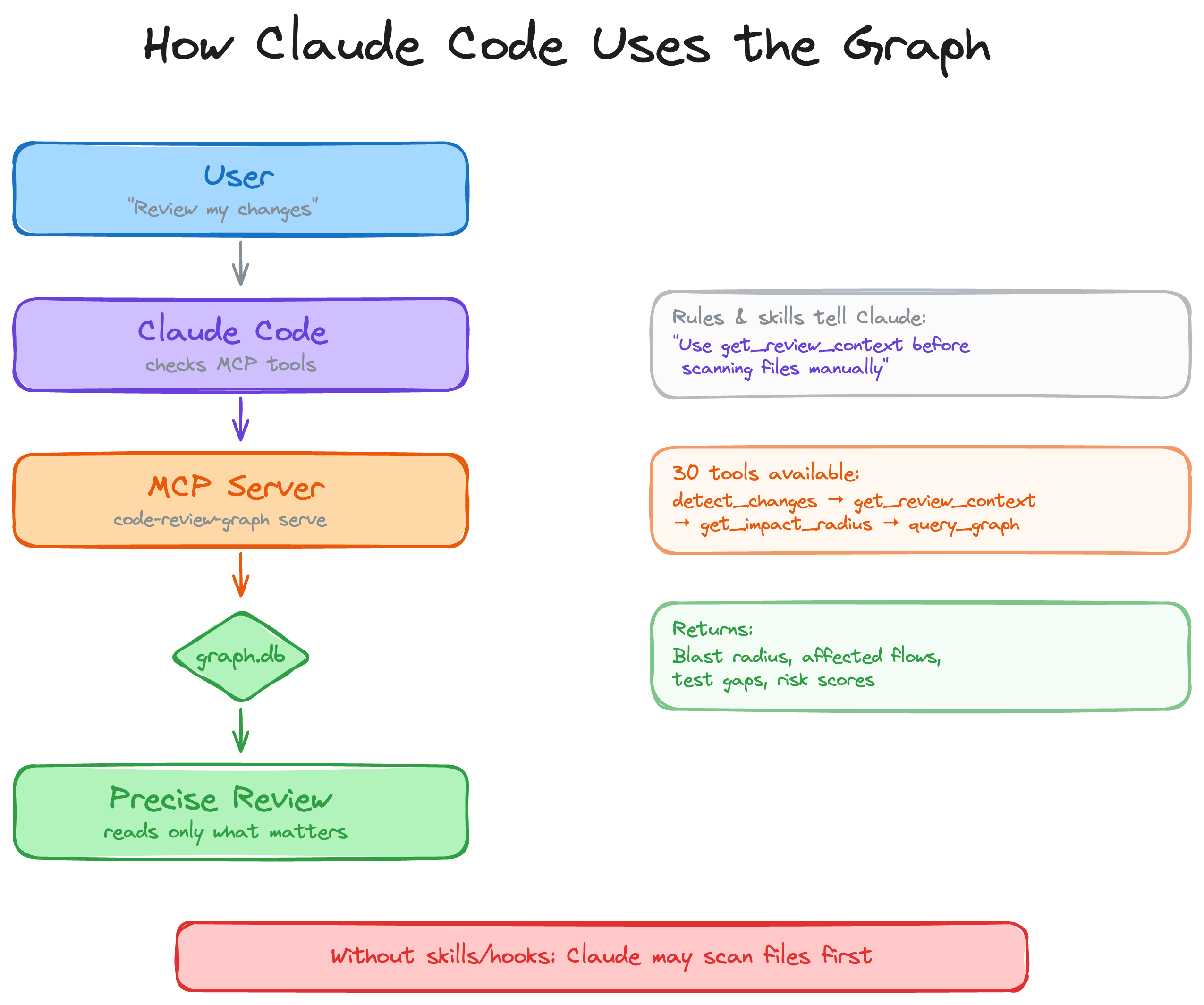
Install it with `pip install code-review-graph`, run `code-review-graph install` to auto-detect and configure whichever AI tools you use (Claude Code, Cursor, Codex, Copilot, and eight others), then `code-review-graph build` to parse the codebase. After that a git hook re-indexes only the files that changed, usually in under two seconds, and the assistant pulls context through 28 MCP tools like `get_impact_radius_tool` and `detect_changes_tool`.
It's built for anyone running an AI coding assistant against a large or unfamiliar codebase, especially monorepos, where the alternative is the model rereading tens of thousands of files on every task. The project's own benchmarks across six open source repos show an 8.2x average token reduction, with one Next.js monorepo cut from 27,700 files down to about 15.
The tradeoff shows up on small, single file edits. The structural metadata the graph adds can cost more tokens than just reading that one file directly, and the maintainers publish that number rather than hiding it.
gallery_thumbnailGallery
zoom_in
zoom_in
zoom_in
SourceOpen source
Authortirth8205
Since2026
LicenseMIT
Versionv2.3.7
OS
LINUXWINDOWSMACOS
auto_awesomeSimilar & Recommended Tools
View Allarrow_forward
SourceOpen source
Authortirth8205
Since2026
LicenseMIT
Versionv2.3.7
OS
LINUXWINDOWSMACOS
Capability
bolt
See the blast radius
Change one function and the graph traces every caller, dependent, and test it touches, the same analysis that cut one Next.js monorepo from 27,700 files down to about 15.
lock
One command, every tool
code-review-graph install detects which of the dozen supported editors you're running, Claude Code, Cursor, Codex, and Copilot among them, and writes the MCP config for each.
extension
Stays current as you code
hook fires on every git commit or file save and re-indexes just the changed files, keeping a 2,900 file project current in under two seconds.